

Introduction
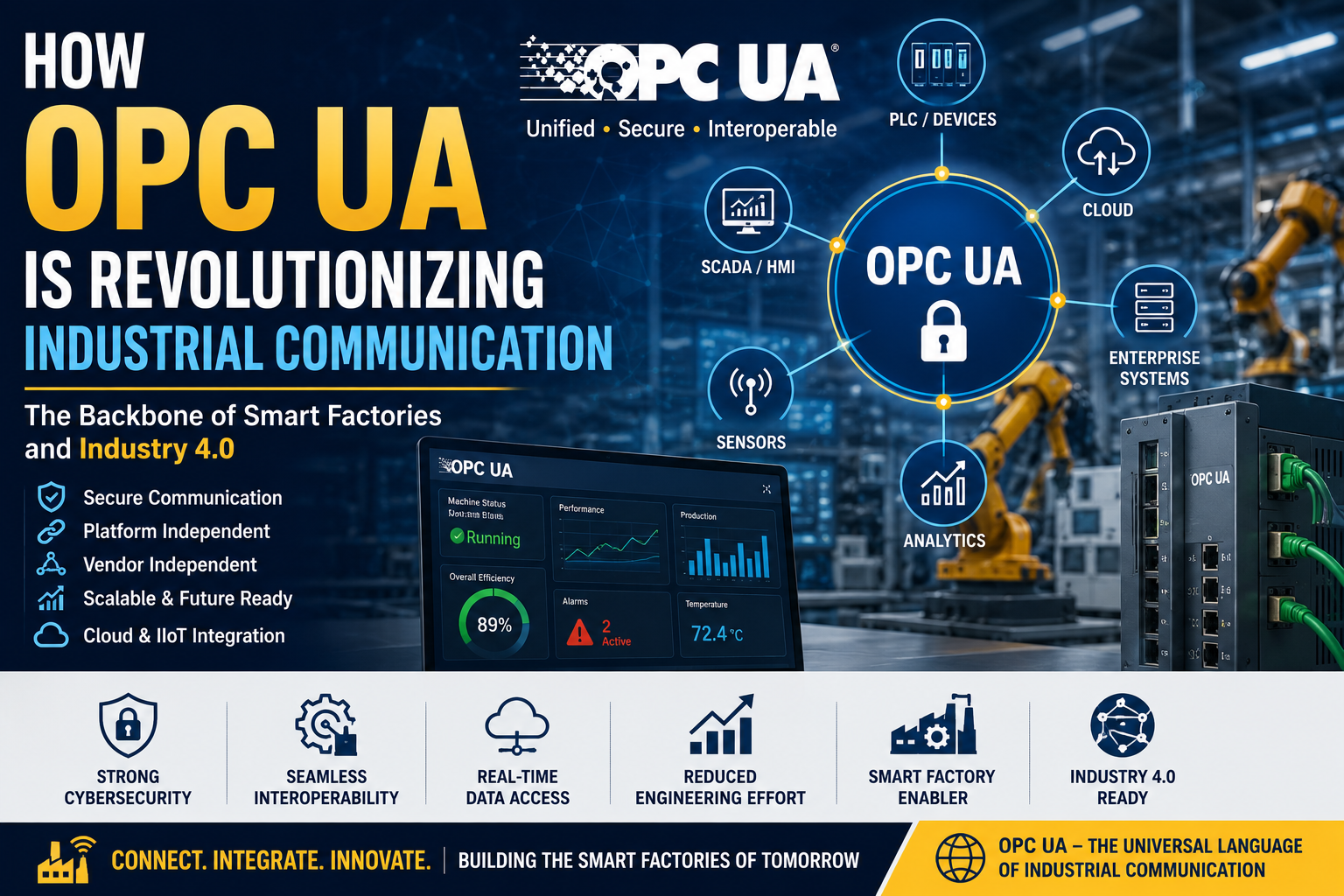
Modern industrial automation systems require fast, reliable, secure, and intelligent communication between machines, PLCs, SCADA systems, sensors, cloud platforms, and enterprise software.
Traditional industrial communication protocols were designed mainly for machine-level connectivity and often lacked interoperability, scalability, and cybersecurity. OPC UA has emerged as a revolutionary technology that solves these challenges and supports smart manufacturing.
What is OPC UA?
OPC UA stands for Open Platform Communications Unified Architecture. It is a modern industrial communication protocol developed by the OPC Foundation to provide secure and reliable data exchange between industrial devices and software systems.
OPC UA is platform independent, vendor independent, scalable, and highly secure, making it ideal for Industry 4.0 applications.
Why Traditional Industrial Communication Had Limitations
Older industrial protocols such as Modbus, Profibus, and DeviceNet were designed mainly for local machine communication.
Common limitations included:
• Poor interoperability
• Limited cybersecurity
• Difficult scalability
• Complex integration
• Limited remote access
As factories became smarter and more connected, industries required a better communication solution.
How OPC UA Works
OPC UA uses client-server architecture.
The OPC UA server provides industrial data such as machine status, process values, and alarms. OPC UA clients access this data securely over Ethernet and industrial networks.
This architecture supports real-time monitoring, analytics, cloud integration, and remote diagnostics.
Key Features of OPC UA
• Platform independent
• Vendor independent
• Strong cybersecurity
• Scalable architecture
• Advanced data modeling
• Cloud-ready communication
• Secure remote access
Platform Independence
OPC UA works on multiple operating systems including Windows, Linux, embedded systems, industrial controllers, and cloud platforms.
This flexibility allows industries to integrate multiple technologies easily.
Vendor Independence
Factories often use equipment from multiple manufacturers such as Siemens, Rockwell Automation, Schneider Electric, and Mitsubishi Electric.
OPC UA enables all these systems to communicate using standardized communication methods.
Cybersecurity
Cybersecurity is extremely important in modern industrial systems.
OPC UA includes:
• Authentication
• Encryption
• User access control
• Secure certificates
• Data signing
These features help protect industrial networks from cyber threats.
Scalability
OPC UA supports communication from small machines to large enterprise-level systems.
Factories can expand automation systems without changing communication infrastructure.
Data Modeling Capability
Unlike traditional protocols that transfer only raw data values, OPC UA supports intelligent structured data.
It can provide:
• Device status
• Engineering units
• Diagnostics
• Maintenance information
• Alarm conditions
This improves interoperability and system understanding.
OPC UA in Industry 4.0
Industry 4.0 focuses on smart manufacturing and connected industrial systems.
OPC UA enables:
• Machine-to-machine communication
• Cloud connectivity
• Real-time monitoring
• Smart analytics
• Predictive maintenance
• Digital transformation
It acts as a bridge between factory-floor devices and enterprise software.
OPC UA and Industrial IoT
Industrial IoT systems depend heavily on secure and reliable communication.
OPC UA provides:
• Standardized connectivity
• Secure remote communication
• Structured data exchange
• Cloud integration
This makes OPC UA one of the most important technologies for Industrial IoT systems.
Applications of OPC UA
• PLC communication
• SCADA integration
• Predictive maintenance
• Smart manufacturing
• Cloud monitoring
• Energy management
• Production analytics
Benefits of OPC UA
• Improved interoperability
• Better cybersecurity
• Easier integration
• Real-time data access
• Reduced engineering effort
• Future-ready infrastructure
• Simplified scalability
Challenges of OPC UA
Although OPC UA provides many advantages, implementation may involve:
• Initial setup complexity
• Network configuration
• Security certificate management
• Engineering learning curve
However, long-term benefits greatly outweigh these challenges.
Future of OPC UA
The future of industrial automation is becoming increasingly intelligent and connected.
OPC UA will continue supporting:
• AI-driven manufacturing
• Digital twins
• Smart factories
• Autonomous production
• Cloud-based analytics
• Industrial cybersecurity
OPC UA is expected to become the universal communication standard for Industry 4.0.
Conclusion
OPC UA is revolutionizing industrial communication by providing secure, scalable, vendor-independent, and intelligent connectivity between industrial devices and software systems.
Factories adopting OPC UA benefit from:
• Better interoperability
• Improved security
• Easier integration
• Real-time data visibility
• Future-ready automation systems
As Industry 4.0 adoption continues growing, OPC UA will remain one of the most important technologies driving smart manufacturing.