

Introduction
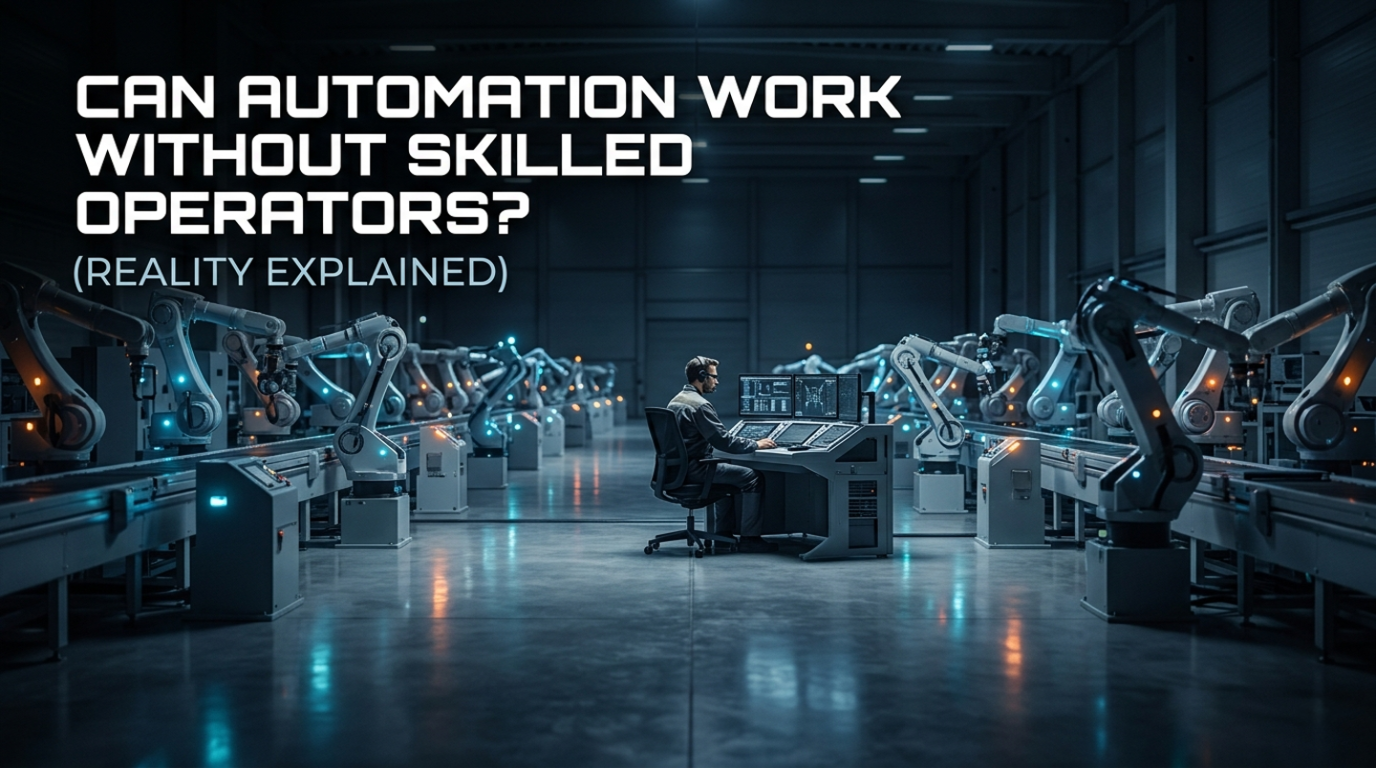
One of the biggest questions factory owners ask before investing in automation is: “Will I still need skilled operators after automation?” There’s a common belief that automation eliminates the need for human involvement. But the reality is different. Automation doesn’t remove humans it changes their role.
The Myth: “Automation Means No Operators”
Many people assume:
- Machines will run everything automatically
- No need for trained staff
- Zero human involvement
Reality:
Automation reduces dependency on manual work but does NOT eliminate the need for skilled people. Instead, it shifts work from Manual labour to Smart supervision, Physical effort to technical understanding
The Reality: Humans + Automation = Maximum Efficiency
Automation systems like:
- PLC (Programmable Logic Controller)
- HMI (Human Machine Interface)
- SCADA systems
are powerful - but they still require:
- Setup
- Monitoring
- Troubleshooting
- Optimization
Machines follow logic. Humans handle intelligence.
Training Needs in Automated Industries
To successfully run an automated system, operators need basic technical training.
1. System Understanding
- How machines operate
- Process flow knowledge
2. HMI Operation
- Reading machine data
- Responding to alarms
- Starting/stopping systems
3. Basic Troubleshooting
- Identifying faults
- Resetting alarms
- Knowing when to call experts
4. Safety Awareness
- Emergency handling
- Safe operation practices
Good news:
Training is simple and practical - operators don’t need to become engineers.
Many industries face a skill gap problem:
Common Issues:
- Operators afraid of technology
- Lack of training programs
- Resistance to change
- Old workforce with manual experience only
Solution:
- Provide structured training
- Use user-friendly HMI screens
- Start with semi-automation
- Partner with automation experts
Companies that invest in training see faster adoption and better results.
Humans move from “doing the job” to “controlling the system”
Real Industry Example
Before Automation:
- 5 operators manually controlling machines
- Low production speed
After Automation:
- 2 trained operators managing system
- PLC + HMI installed
- Real-time monitoring
Result:
- Increase in production
- Reduced manpower dependency
- Better control & accuracy
Benefits of Automation with Skilled Operators
1. Better Decision Making
- Operators can act quickly using real-time data
2. Reduced Downtime
- Trained staff can identify issues early
3. Improved Productivity
- Less manual work, more efficient control
4. Higher Safety
- Automation + trained operators reduce accidents
Future of Workforce in Automation
The future is not: Humans vs Machines
It is Humans working WITH machines
Future roles will include:
- Automation operators
- System supervisors
- Maintenance engineers
- Data analysts
Key Takeaways
- Automation reduces manual work, not human importance
- Skilled operators are still essential
- Training is the key to success
- Automation improves efficiency when combined with human intelligence
Conclusion
Automation alone is powerful - but automation with trained people is unstoppable.
If your factory is planning automation:
Don’t just invest in machines
Invest in people + training
Call to Action
Looking to implement automation in your factory?
We help industries with:
- Complete automation solutions
- Operator training support
- System design & commissioning
Contact us today to upgrade your factory the smart way.