

Introduction
In an era where efficiency, precision, and speed define competitive advantage, industrial automation has emerged as the backbone of modern manufacturing and production facilities. From automotive assembly lines to pharmaceutical packaging plants, automation technology is revolutionizing how industries operate, compete, and innovate. This comprehensive guide explores what industrial automation truly means and why it has become indispensable for businesses aiming to thrive in today's fast-paced industrial landscape.
What is Industrial Automation?
Industrial automation refers to the use of control systems, such as computers, robots, and information technologies, to handle different processes and machinery in an industry to replace human intervention. It represents the second step beyond mechanization in the scope of industrialization, where automated systems operate with minimal or no human input while maintaining high levels of accuracy and consistency.
Core Components of Industrial Automation
Control Systems: These include Programmable Logic Controllers (PLCs), Distributed Control Systems (DCS), and Supervisory Control and Data Acquisition (SCADA) systems that manage and monitor industrial processes.
Sensors and Actuators: Sensors collect data from the production environment, while actuators execute physical actions based on control system commands, creating a feedback loop that enables autonomous operation.
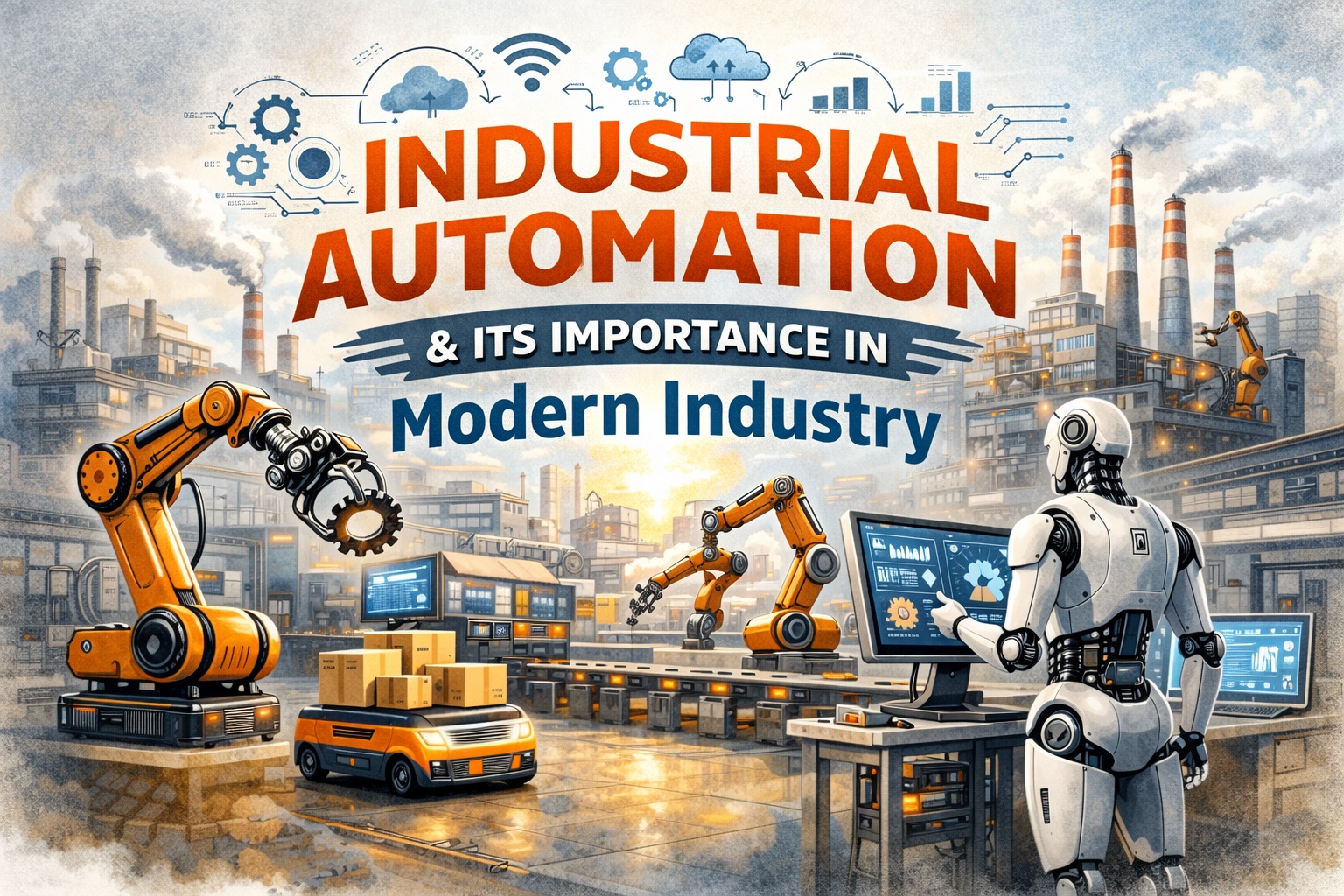
Industrial Robotics: Robotic arms, automated guided vehicles (AGVs), and collaborative robots (cobots) perform repetitive, dangerous, or precision-requiring tasks with consistency and speed.
Human-Machine Interface (HMI): These systems allow operators to interact with automated processes, monitor performance, and intervene when necessary.
Communication Networks: Industrial Ethernet, fieldbus systems, and wireless protocols enable seamless data exchange between different automation components.
Why Industrial Automation is Important in Modern Industry
1. Enhanced Productivity and Efficiency
Automated systems operate continuously without fatigue, breaks, or shift changes, dramatically increasing production capacity. A manufacturing line that once required human oversight for 16 hours can now run 24/7 with minimal supervision. This continuous operation translates directly to higher output and faster time-to-market for products.
Moreover, automation eliminates the variability inherent in manual processes. Machines perform identical operations with remarkable consistency, reducing cycle times and maximizing equipment utilization. Studies show that automated production lines can achieve productivity improvements of 30-50% compared to traditional methods.
2. Improved Quality and Consistency
Human error remains one of the leading causes of defects in manufacturing. Automated systems execute tasks with precision measured in micrometres, ensuring each product meets exact specifications. Quality control mechanisms integrated into automation systems detect deviations in real-time, preventing defective products from progressing through production.
This consistency extends beyond individual products to entire batches, ensuring uniformity that manual processes struggle to achieve. In industries like pharmaceuticals and aerospace, where quality standards are stringent and non-negotiable, automation provides the reliability that regulatory compliance demands.
3. Cost Reduction Over Time
While the initial investment in automation technology can be substantial, the long-term cost benefits are compelling. Labor costs, which often represent 20-35% of manufacturing expenses, decrease significantly as machines handle tasks previously requiring multiple workers. Energy efficiency improvements through optimized processes further reduce operational costs.
Additionally, automated systems minimize waste by precisely measuring and dispensing materials, reducing scrap rates and material costs. Predictive maintenance capabilities prevent unexpected down downs, avoiding costly production interruptions and extending equipment lifespan.
4. Enhanced Workplace Safety
Industrial environments pose numerous hazards, from heavy machinery and high temperatures to toxic chemicals and repetitive strain injuries. Automation removes workers from dangerous situations, with robots handling tasks involving extreme conditions, hazardous materials, or physically demanding operations.
This shift not only protects employee wellbeing but also reduces costs associated with workplace injuries, insurance premiums, and compensation claims. Companies report significant decreases in workplace accidents after implementing automation in high-risk areas.
5. Data-Driven Decision Making
Modern automation systems generate vast amounts of operational data, providing unprecedented visibility into production processes. Real-time monitoring reveals bottlenecks, inefficiencies, and trends that would be invisible in manual operations. This data empowers managers to make informed decisions about process improvements, maintenance scheduling, and resource allocation.
Integration with analytics platforms and artificial intelligence enables predictive insights, forecasting equipment failures before they occur and optimizing production schedules based on historical patterns and current demand.
6. Competitive Advantage in Global Markets
In today's globalized economy, companies face intense competition from manufacturers worldwide. Automation levels the playing field, allowing businesses to compete on quality, speed, and innovation rather than solely on labour costs. Automated facilities can respond rapidly to market changes, customizing products and adjusting production volumes with agility that manual operations cannot match.
Companies embracing automation position themselves as industry leaders, attracting customers who value reliability, quality, and technological sophistication. This reputation creates barriers to entry for competitors and establishes long-term market presence.
7. Addressing Labor Shortages and Skills Gaps
Many industries face critical shortages of skilled workers, particularly as experienced professionals retire and fewer young people enter manufacturing careers. Automation alleviates this pressure by reducing dependence on manual labour for routine tasks while elevating remaining workers to supervisory and technical roles.
Rather than replacing workers entirely, automation often transforms job functions, creating opportunities for employees to develop higher-value skills in programming, maintenance, and process optimization.
8. Environmental Sustainability
Automated systems optimize resource consumption, reducing energy usage, water consumption, and material waste. Precise control over processes minimizes environmental impact while meeting increasingly stringent regulatory requirements. Many automated facilities achieve significant reductions in carbon footprint compared to traditional operations.
Furthermore, automation enables better tracking and reporting of environmental metrics, supporting corporate sustainability goals and transparent communication with stakeholders about environmental performance.
Challenges and Considerations
Despite its numerous benefits, implementing industrial automation presents challenges that organizations must address:
High Initial Investment: The upfront costs for equipment, installation, and training can be substantial, requiring careful financial planning and ROI analysis.
Technical Complexity: Modern automation systems require specialized expertise to design, implement, and maintain, necessitating investment in training or hiring skilled personnel.
Cybersecurity Risks: Connected industrial systems face increasing cyber threats, requiring robust security measures and ongoing vigilance.
Workforce Transition: Organizations must manage the human impact of automation, providing retraining opportunities and addressing employee concerns about job displacement.
Integration with Legacy Systems: Many facilities must integrate new automation technologies with existing equipment, which can be technically challenging and costly.
The Future of Industrial Automation
The trajectory of industrial automation points toward even greater integration of advanced technologies. The Industrial Internet of Things (IIoT) connects devices across entire facilities and supply chains, enabling unprecedented coordination and optimization. Artificial intelligence and machine learning algorithms continuously improve processes, learning from operational data to enhance performance autonomously.
Digital twins - virtual replicas of physical assets and processes - allow companies to simulate and optimize operations before implementing changes in the real world. Augmented reality assists technicians in maintenance and troubleshooting, while 5G networks provide the bandwidth and low latency required for real-time control of distributed systems.
These emerging technologies promise to make automation more accessible, intelligent, and adaptable, extending its benefits to smaller businesses and a broader range of applications.
Conclusion
Industrial automation has evolved from a competitive advantage to a fundamental requirement for modern industry. Its importance extends beyond simple cost savings to encompass quality improvement, safety enhancement, environmental sustainability, and the agility needed to compete in dynamic global markets. While challenges exist in implementation and workforce transition, the compelling benefits make automation an inevitable trajectory for industries seeking long-term viability and growth.
Organizations that embrace automation thoughtfully, investing in technology while supporting their workforce through the transition, position themselves not just to survive but to lead in their respective industries. As technology continues advancing and becoming more accessible, the question is no longer whether to automate, but how quickly and comprehensively to implement automation strategies that align with business objectives and market demands.
The industrial revolution brought mechanization; the digital age brings automation. Companies that understand and harness this transformation will define the future of manufacturing and industrial production.