

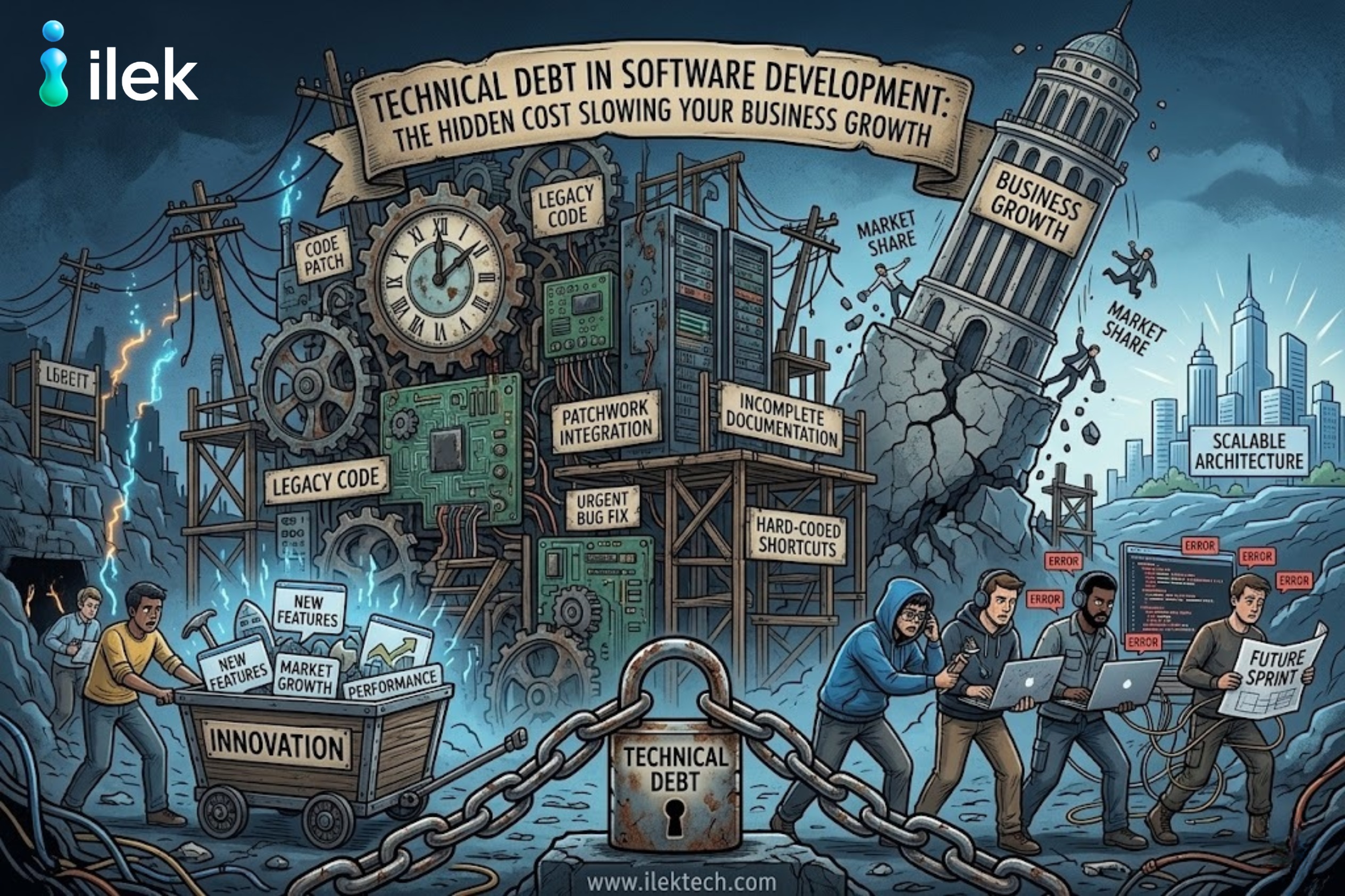
Introduction
As businesses scale their digital platforms, speed often becomes the top priority. New features are released quickly, deadlines are met, and products evolve rapidly.
However, this fast-paced development often comes at a cost - technical debt.
Technical debt refers to the compromises made during software development that may save time in the short term but create long-term challenges.
For CIOs and startup founders, unmanaged technical debt can slow innovation, increase costs, and impact system performance.
Understanding and managing technical debt is essential for building sustainable and scalable software systems.
What is Technical Debt?
Technical debt is the cost of additional work caused by choosing quick or easy solutions instead of better long-term approaches.
It often occurs when:
- Code is written quickly without proper structure
- Documentation is incomplete
- Temporary solutions become permanent
- System design is not scalable
While some level of technical debt is unavoidable, excessive debt can become a serious problem.
Types of Technical Debt
1. Code Debt
Poorly written or unoptimized code that is difficult to maintain.
2. Architecture Debt
Using outdated or inefficient system design that limits scalability.
Many organizations face this when they do not adopt microservices architecture for scalable applications, leading to rigid and difficult-to-scale systems.
3. Infrastructure Debt
Outdated infrastructure that cannot support modern workloads.
This becomes a major issue when businesses delay adopting cloud-native technologies.
4. Documentation Debt
Lack of proper documentation makes systems harder to understand and maintain.
Why Technical Debt is a Business Problem
Technical debt is not just a developer issue - it directly impacts business performance.
1. Slower Development
Teams spend more time fixing old issues instead of building new features.
2. Increased Costs
Maintenance costs increase as systems become more complex.
3. Reduced Scalability
Systems struggle to handle growth due to poor architecture.
This is especially common in applications that are not built using modern approaches like API-first development.
4. Higher Risk of Failure
Unstable systems are more likely to fail under pressure.
How Technical Debt Impacts SaaS Platforms
SaaS platforms require continuous updates, scalability, and high performance.
Technical debt can significantly impact these systems.
For example:
- Slower feature releases
- Increased downtime
- Poor user experience
Many businesses building AI-powered SaaS platforms face challenges when technical debt is not managed early.
Signs Your Software Has High Technical Debt
Organizations should watch for these warning signs:
- Frequent bugs and system crashes
- Slow development cycles
- Difficulty adding new features
- Poor system performance
- Increasing maintenance effort
If these issues are present, technical debt may be the root cause.
Strategies to Manage Technical Debt
1. Prioritize Code Quality
Developers should follow best practices and write clean, maintainable code.
2. Refactor Regularly
Refactoring helps improve existing code without changing functionality.
3. Adopt Modern Architecture
Using scalable approaches like microservices architecture for scalable applications helps reduce long-term debt.
4. Implement API-First Design
Designing systems with API-first development ensures flexibility and easier integration.
5. Invest in Cloud-Native Solutions
Modernizing infrastructure with cloud-native applications improves scalability and reduces debt.
Balancing Speed and Quality
One of the biggest challenges for organizations is balancing fast delivery with long-term quality.
While quick solutions may help in the short term, ignoring technical debt can lead to major problems in the future.
The key is to:
- Make informed trade-offs
- Track technical debt
- Allocate time for improvements
Future of Software Development
As software systems become more complex, managing technical debt will become even more important.
Organizations that prioritize clean architecture, scalable systems, and modern development practices will be better positioned for growth.
Ignoring technical debt is no longer an option - it is a critical factor in long-term business success.
Conclusion
Technical debt is one of the most overlooked challenges in software development, yet it has a direct impact on business performance.
By understanding its causes and implementing the right strategies, organizations can build scalable, efficient, and future-ready systems.